So you think you know about blueberries? They come in a box during the fresh season, or frozen in a bag. You can get them cooked into muffins and pies, or as juice. Apparently they are the new super food. What could be so special about them? You go out into a field, pick them, sell them, and that’s that, right?
Much more to it than that!
Blueberries are a pretty big deal here in the Maritimes and in Maine. The majority of North America’s blueberry production happens here. Some happens in Ontario. I’ve even seen blueberry bushes planted in fields in the Fraser Valley outside of Vancouver, where strawberries, broccoli and other crops were planted previously over the years.
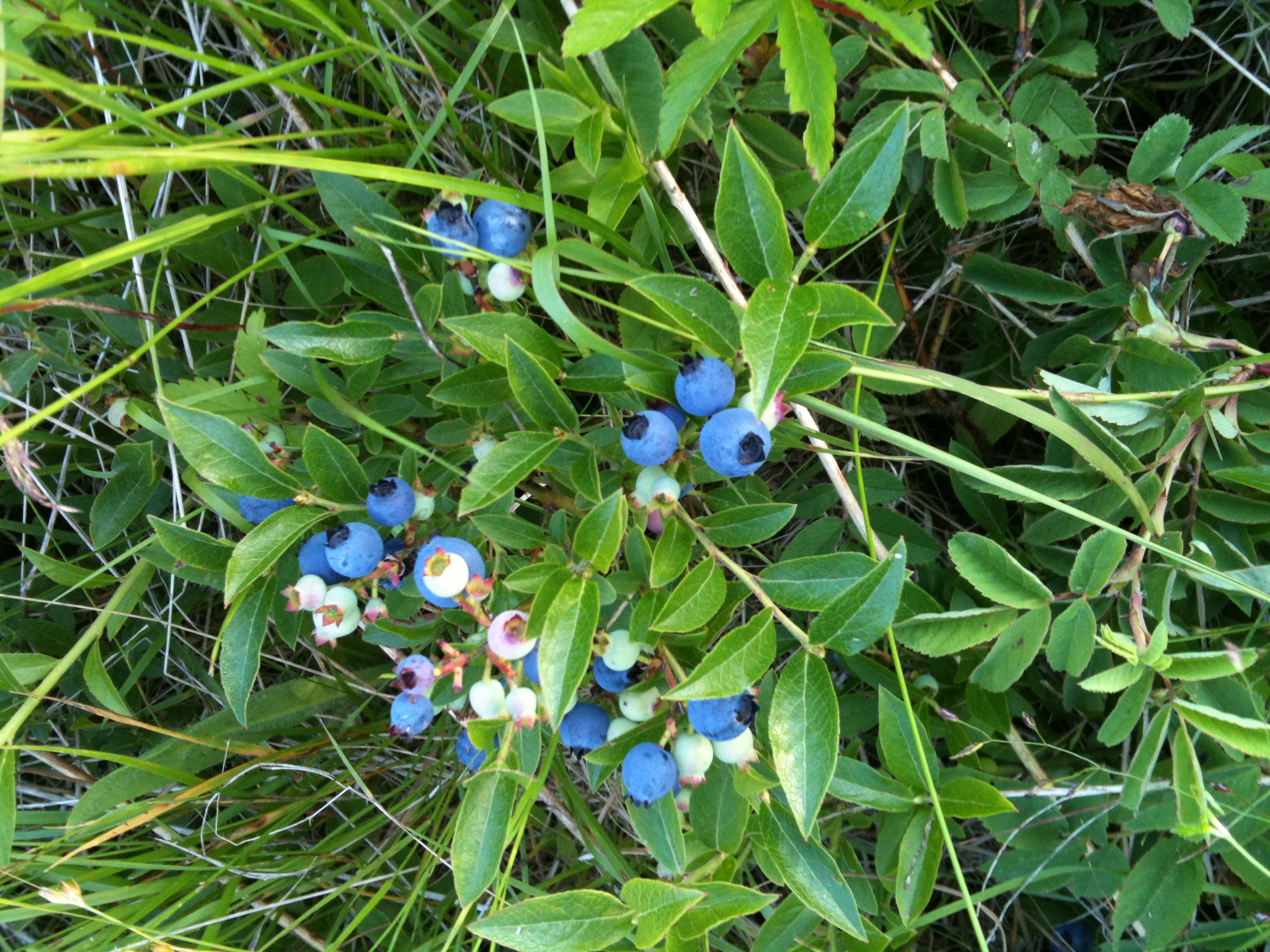
Most of the plantings in our area here are the lowbush, or “wild” types. Now, how did wild blueberries come to be in major field production, you ask? Well, let me give you a thumbnail sketch!
Blueberries grow wild in the forests. They are best suited for growth on land that is not good for too much of any other kind of agriculture. They can be allowed to grow on old, impoverished fields, or the areas where they grow need be logged, cleared, and otherwise prepared for their culture. It is a three-to-five-year proposition to start a new “Blueberry Ground” Many families out here have had land for generations, so they own it outright and don’t need to worry about land payments other than taxes, which are negligible. This makes the process a viable proposition.
The soil has to be quite acidic and lime should never be added, since that will kill the blueberries.
Once the land is in production, most growers grow their crops in a two-year succession, with the occasional third –second year in production–year added to the cycle. After a crop year in the fall, they burn the blueberries to get rid of the old stalks and kill off pests and disease organisms. This is done with oil or propane torches, and requires fireguards and permits, even in rural areas. Some farmers now mow the bushes down with flail mowers. More on this later. Either way, the old stalks are gotten rid of and the plants can regenerate from rhizomes underground. In the year following, they are allowed to regrow, and are not very productive in any case.
The fields that were mowed, are sprayed with insecticide and fungicide to keep the pests and diseases at a low level. The burned fields need less chemical input.
Some farmers spray a grass retardant on the fields during the regeneration year so the berries don’t have as much competition from grasses. Also makes the berries easier to harvest. Tree saplings that try to establish themselves are eliminated with targeted applications of Roundup.
In the following spring, growers bring beehives on to their land to help pollinate their crops. The fields are fertilized to enhance growth and berry size. A well-kept field looks almost like a nice lawn. At least from a distance.
The crop ripens in August. The big open fields are harvested with a mechanical picker. Smaller fields, or fields with a lot of rocks or other obstructions are still harvested by hand. Pickers use a “blueberry rake” to scoop the berries off the plants and into buckets or crates.
One big difference between harvesting highbush and lowbush blueberries is that the lowbush are all picked at the same time, when most of the berries are ripe. The highbush berries, especially ones for “U-Pick” farms, are picked over several times as the flushes of berries ripen. This makes mechanical picking less attractive.
People out here value their land, and especially their blueberries, greatly and speak of them with great reverence. Problem is, so many new people have begun to jump on the bandwagon to produce the “Super-food” that the market is suffering now. Prices dropped from $1.10 per pound in 2007 to around 35 to 39 cents per pound last year. Growers can’t cover the cost of production for that kind of price. Like in every market, inefficient growers will drop off. Unfortunately, the lure to use more chemicals to enhance production is ever greater.
The one big argument, as in any crop production, is Organic versus chemically enhanced. One grower told me “Organic is all fine and dandy, but at the end of the day, the customer is going to complain if a worm crawls out of the box of blueberries.” There’s a point, but on the other hand, the chemicals have to be having an effect on the environment.
Crop yield is higher with chemicals, so aside from the esthetics, that makes a huge difference as well. It’s a vicious cycle.
We shall see how the price of blueberries develops this year as picking time approaches. The ads asking for pickers are out in the newspapers. Many people I’ve talked to had their early jobs picking berries. Unfortunately,many people now don’t want to go out picking these days. Last year, I read that New Brunswick farmers did a trial run bringing in pickers from Jamaica for the season, then to send them home when the crops were in. Hmm. What are we coming to?